BETA / LIVE
Civillian Roleplayer Handbook - UNITAF Force Manual (FM)


Civillian Roleplayer Handbook
The FM outlines our core skills, policies and guides to ensure every member stands ready for the mission ahead.


Civillian Roleplayer

Civillian Roleplayer

in Mission Support Scenario Operations
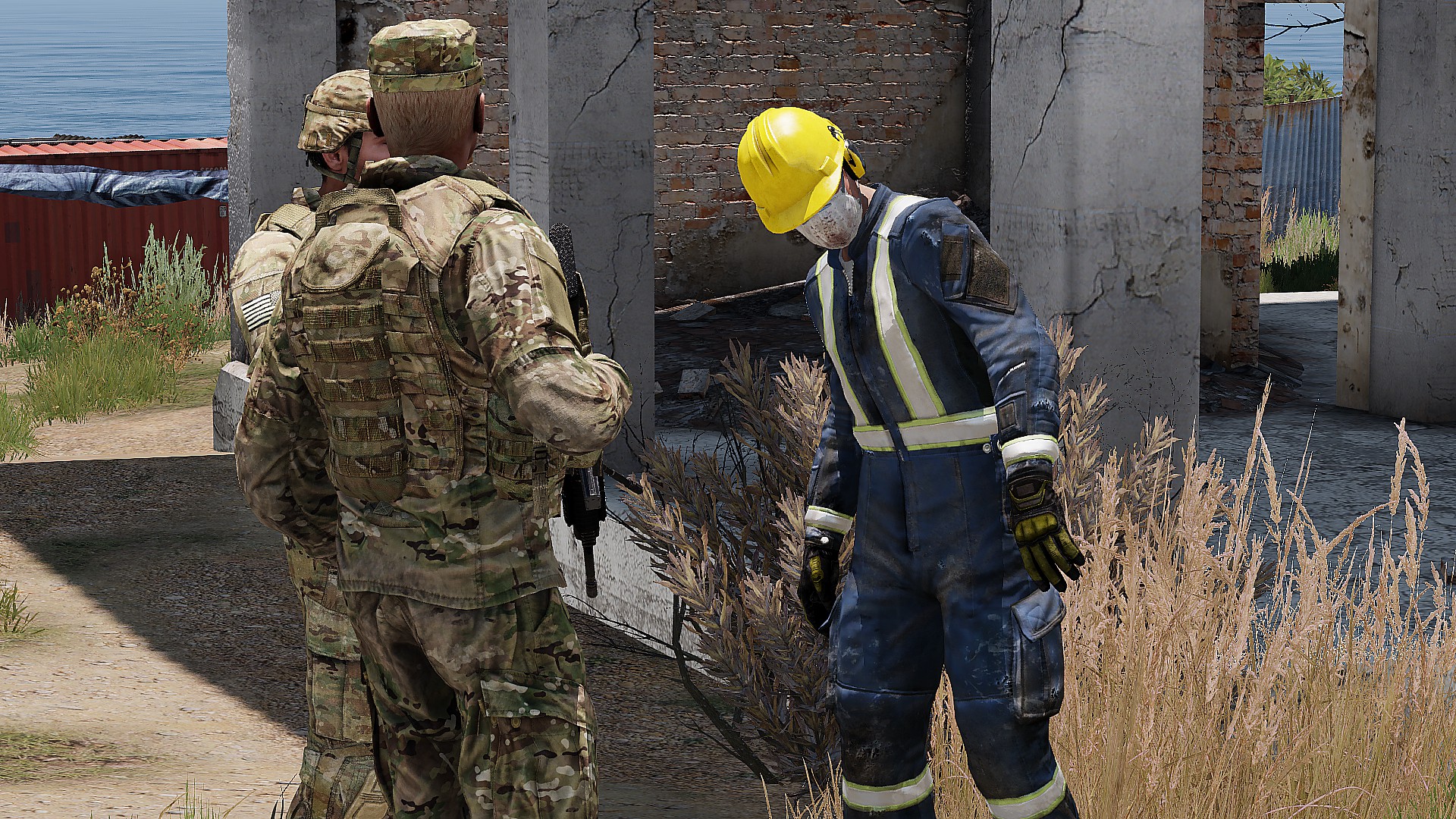
Roleplayers are individuals that take remote control of various units throughout and operation, they role-play civilians, hostages, HVTs and various other units to better interact with deployed units, they may speak English or other languages and serve to increase the immersion of all involved.
Filters
Verified Role Card
The role card has skills populated, SP set and the progression is considered to be complete and accurate. Access levels are calculated from verified, role-specific skill point requirements. All skill blocks, guides, and policies have been reviewed and confirmed to be specific and accurate for this role. You can rely on this information for training decisions and progression planning.

FM/G271 - Mission Support Experience

FM/BG-1236 - Temporary Experience Requirements Explained

Your role access is determined by your skills, experience with those skills, and the specific roles that utilize them. With over 100 roles in UNITAF, creating detailed skill breakdowns for every role is a substantial undertaking that cannot be completed overnight. 

Estimated Role Cards

To ensure the entire unit can transition to the new system immediately, some roles are tagged as **"Estimated"**. These roles use a transitional approach:

  • Temporary skill blocks simulate role-specific experience
  • Estimated access levels are calculated based on these placeholder blocks
  • Similar to LTS functionality but with improved accuracy and fewer limitations

Current State: Estimated roles provide functional access levels that closely mirror the previous LTS system while addressing many of its shortcomings. As development progresses, estimated role cards will be upgraded to the full FTS3 standard with detailed, role-specific skill requirements.

Important Note: When roles transition from "Estimated" to "Verified" status, your access level may change (either increase or decrease) as the requirements become more precise and role-specific.

This approach allows UNITAF to:

  • Maintain operations during the transition period
  • Provide immediate access to the improved FTS3 system
  • Ensure continuity while detailed role cards are developed
  • Gradually improve role accuracy over time

The estimated system serves as a bridge, ensuring no disruption to unit operations while we build toward the comprehensive FTS3 vision.

FM/BS-1240 - Experience as Game Master

This is a temporary skill block, the skill block is being used to accumulate SP for time spent as any Game Master role until it's role card is completed.

FM/BS-1241 - Experience as Lead Game Master

This is a temporary skill block, the skill block is being used to accumulate SP for time spent as Lead Game Master until it's role card is completed.

FM/BS-1242 - Experience as Roleplayer

This is a temporary skill block, the skill block is being used to accumulate SP for time spent as any Roleplayer until it's role card is completed.

FM/BS-1674 - Experience as Lead Game Master (<15)

This is a block which allows players to gain experience at the <15 level of Lead Game Master.

FM/BS-1675 - Experience as Lead Game Master (<32)

This is a block which allows players to gain experience at the <32 level of Lead Game Master.

FM/G146 - Introduction to Mission Support

FM/BG-761 - Being an (Assistant) Game Master in UNITAF

The Mission Support Team (MST) plays a critical role in the operation and those taking part in them are held to a very high standard, as set by the leadership. The role of a Lead Game Master (LGM), Game Master (GM) or Assistant Game Master (AGM) is to work with and alongside the Field Leadership to ultimately provide an enjoyable yet challenging and immersive experience.

As a Lead Game Master (LGM), Game Master (GM) or Assistant Game Master (AGM), your role is to collaborate closely with Field Leadership to deliver a challenging, immersive, and enjoyable experience for all participants. However, mission support is not limited to creating missions. There is no obligation to focus on mission creation if your interest lies in live mission support.

Whether you are managing active operations or enhancing immersion through roleplay, the MST provides an inclusive environment for all levels of involvement. Every role—be it Lead Game Master, Game Master, Assistant Game Master, or roleplayer—is equally valued and integral to the success of UNITAF operations.

Collaborative MST Operations

The practical staffing challenges are recognized, such that the ideal staffing structure may not be possible to achieve at all times, for example, one LGM and multiple GMs, AGMs per platoon operation. In this case, the LGM, GMs and AGMs will work together, with AGMs supporting operational needs dynamically.

FM/BP-742 - What happens in zeus, stays in zeus

Do not publicly disclose any behind-the-scenes or otherwise unseen events from a mission. This includes details not directly observable by units or players, as well as any information that could disrupt immersion.

FM/BP-773 - Do not criticize other UNITAF members in public

Avoid publicly critiquing the actions or decisions of any units or players. Internal discussion within the Mission Support Team is permitted, and relevant feedback should be directed to the Field Leader through proper channels. See FM/BP-225 - Article 1: Code of Conduct

FM/BP-743 - Recording/live streaming

Recording and live streaming are generally allowed; however, some restrictions apply to protect operation integrity and participant comfort:

Mission Support Team deployments

Streaming or publishing recordings of any sort while serving as part of the Mission Support Team is strictly forbidden. This is in accordance with FM/BP-742 - What happens in zeus, stays in zeus), as the revelation of behind-the-scenes information could undermine the player's sense of immersion. Edited recordings that maintain this confidentiality may be acceptable.

Field Training Exercises (FTX)

No recording or streaming during FTX to foster a supportive atmosphere where participants can learn and make mistakes without the scrutiny of the public eye.

FM/BG-772 - Mission Support terminology

Mission support operations have special terms that help in clarity and effective communication. Below are commonly used terms and their definitions:

  • IO (Intelligence Officer): The person responsible for overseeing the Mission Support Team (MST) during a mission. Normally, this is the Game Master or Mission Support Observer.
  • FL (Field Leader): The leader in charge of the overall deployment, managing player forces and coordinating with the MST for mission objectives.
  • SA (Server Administrator): Person responsible for server performance, troubleshooting, and guaranteeing smooth operation during deployments.
  • RP (Role-players or Role-play): People who increase immersion by role-playing characters, civilians, or other non-combatant roles within the mission environment.
  • RC (Remote Control): The practice of direct control over AI units, vehicles, and other elements in order to simulate realistic behaviour or to adjust mission dynamics.
  • MST (Mission Support Team): The general term for all members that take part in mission support, including Lead Game Master (LGM), Game Masters (GMs), Assistant Game Masters (AGMs), Mission Support Observers (MSO), role-players (RPs), and OPFOR role-players (OPFOR RP).
FM/BP-832 - Role of a Mission Support Observer

The Mission Support Observer is a passive, supportive role on the Mission Support Team and is filled by experienced instructors with extensive expertise in Mission Support. These observers evaluate the team’s performance to ensure missions are conducted in full compliance with the Field Manual.

The decision to include a Mission Support Observer on a particular mission should be made by the Field Leader and the Mission Support Instructor Team. The following factors are general considerations:

  • Request for ratings
  • Game Master seniority
  • Previous instances of non-adherence to the Field Manual
  • Poor performance ratings in past deployments

The Mission Support Observer does not perform any game master duties and is not part of the GM team.

FM/G143 - Assisting the Lead Game Master

FM/BS-732 - Act within the parameters set by the Lead Game Master

Work strictly within guidelines and constraints set by the LGM, no matter how large or small. This includes:

  • Follow the guidelines and constraints set by the LGM.
  • Avoid actions that could disrupt the mission or its objectives.
  • Seek clarification from the LGM when the parameters are unclear.
FM/BS-733 - Keep the Lead Game Master informed

Keep the LGM informed about critical developments that happen during missions, including:

  • Player force progress: Provide timely updates on any advancements, setbacks, or major achievements by the player force.
  • Enemy spawning: Inform the LGM of spawned enemy forces and their locations, and for what purpose to maintain cohesive missions.
  • MASCAS events: Report mass casualty incidents quickly, including the extent and location of the event.
  • Technical issues: Communicate to them any technical issues impeding the operation, such as server performance or player connectivity problems.
FM/BG-763 - Responding to pings

The general approach to responding to player pings is as follows:

  • Multiple pings: Respond to the ping for players who are pinging two or more times in quick succession; that is, three pings, or a series within 30–60 seconds, which usually means the player likely needs attention or assistance.
  • Single pings: Generally ignore single pings because these are usually accidental and require no action.

Note that wherever possible, player requests should be pushed through the chain of command rather than relying on pings. This provides better flow and does not create unnecessary interruption to the Lead Game Master or Mission Support Team. Only directly respond to pings if it's clear immediate action is required or the request cannot be serviced through the traditional command structure.

FM/G153 - Using the Zeus interface

FM/BG-760 - Importing PLANOPS

Follow these steps to import PLANOPS data into your Arma 3 mission:

  1. Export PLANOPS data:
    • Navigate to the PLANOPS map website.
    • Click the “Share” button, then select “Export to Arma3”.
    • Choose the layers you wish to export (select all if unsure).
    • Specify the channel to be used:
      • "Vehicle" if the shared map is off
      • "Global" if the shared map is on
  2.  Run in-game:
    • Open the Zeus interface.
    • Locate and place the "Execute Code" module.
    • Paste the copied PLANOPS code into the module.
    • Set execution to "LOCAL" and click "EXECUTE".
  3. Verify import:
    • Close out the Zeus interface.
    • Open your map in-game to make sure that the markings have come in correctly and are visible.
FM/BG-765 - Remote controlling a vehicle with a turret

Follow these steps to remote control a vehicle with a turret in Arma effectively: 

  1. Enter remote control by using either the Remote Control module or the context menu to take control of the vehicle.
  2. Change to a gunner seat for accessing turret controls.
  3. Use ACE Self-Interact > Group Management > Become Leader to take leadership of the group.
  4. After becoming the group leader, you can steer the vehicle using normal steering controls while simultaneously operate the turret as the gunner.

Note that this works for most cases, but not all. If the above does not work, coordinate with other members of the MST, or use the AI driver.

FM/G145 - Creating a fun battlefield

FM/BS-809 - Behave in fair manner when remote controlling

Be fair when remote controlling against a player:

  • Give the player a chance to detect and neutralize the threat of the controlled unit.
  • Avoid placing the player in situations that make it impossible to have any realistic chances for survival or response, unless doing so is part of the narrative and specifically instructed by the LGM
FM/BP-762 - Remote control against players

The following rules apply when remote controlling against players:

  • Specific players should not be exclusively targeted. Targeting by role (medics or squad leaders, for example) is allowed if it makes sense for the portrayed unit's tactics and objectives.
  • Do not intentionally cause injuries beyond what can reasonably be treated by available medical personnel.
  • Do not abuse game bugs to gain an advantage
FM/BS-744 - Spawn units or objects in an immersive manner

When spawning units or objects:

  • Place them out of sight of players.
  • Ensure they appear in believable locations. Avoid areas that have already been cleared or locations they could not realistically occupy or reach.
  • Allow time for Headless Client (HC) transfer before issuing orders. Place units, then wait for the HC transfer to complete to avoid needing to re-issue commands.
FM/BS-741 - Behave in an immersive manner when remote controlling

When using remote units, follow these basic principles to enhance immersion and realism:

  • Adapt to the role, including any applicable behaviours, tactics, and limitations of the enemy force you are portraying.
  • Engage with a level of accuracy that reflects the training and equipment of the unit.
  • Ensure actions are consistent with the unit's knowledge and situation:
    • Do not take actions based on knowledge unavailable to the enemy unit.
    • Avoid tactics or manoeuvres that are beyond what the represented unit could realistically do.
FM/BS-739 - Use plausible tactics

Command the enemy force in a way that is plausible for the given faction and time frame, by:

  • Using authentic tactics/movement
  • Using appropriate and believable numbers of assets
  • Having the enemy force make mistakes, as (unlike the MST) they do not have perfect situational awareness

FM/G148 - Roleplaying

FM/BS-748 - Maintain in-character roleplay

When roleplaying, it is essential to consistently stay in character (IC) to preserve immersion and authenticity. Adhere to the following guidelines:

  • Consistent character behaviour: Ensure that your actions, speech, and decisions align with your character's established personality, background, and motivations.
  • Out-of-character (OOC) disruption: Do not bring personal or real-life information into the roleplay space. If necessary, OOC should be confined to specified channels or clearly distinguished from any in-character interaction.
  • Respect in-character/Out-of-character boundaries: Do not allow out-of-character knowledge to affect in-character actions; similarly, using in-character actions to resolve an out-of-character issue is not acceptable.
FM/BS-741 - Behave in an immersive manner when remote controlling

When using remote units, follow these basic principles to enhance immersion and realism:

  • Adapt to the role, including any applicable behaviours, tactics, and limitations of the enemy force you are portraying.
  • Engage with a level of accuracy that reflects the training and equipment of the unit.
  • Ensure actions are consistent with the unit's knowledge and situation:
    • Do not take actions based on knowledge unavailable to the enemy unit.
    • Avoid tactics or manoeuvres that are beyond what the represented unit could realistically do.
FM/BS-809 - Behave in fair manner when remote controlling

Be fair when remote controlling against a player:

  • Give the player a chance to detect and neutralize the threat of the controlled unit.
  • Avoid placing the player in situations that make it impossible to have any realistic chances for survival or response, unless doing so is part of the narrative and specifically instructed by the LGM
This page generated 1.41MB in 0.0853 seconds.